You know that dream where you show up to class and you’re totally naked and everyone is looking at you?
Yeah, that’s pretty much what I do for work.

Hi, my name is Jessica, and I’m a professional life model. Mainly it involves posing – often nude – for varying lengths of time in the presence of artist groups and art students. And while modelling is not a substitute for therapy, I have found that it, like other types of art, has many therapeutic qualities and has been especially beneficial for my mental health.
People get into life modelling for various reasons. Some models are art students themselves and want to experience the modelling side of art (and make a bit of money, too!). Other folks, like me, come from a dance and theatre background and excel in the performative aspect of modelling. Some just enjoy existing without clothes on and find life modelling a socially acceptable way to achieve this publicly. I also know people who started modelling because they didn’t have work visas in the country they were living in, and in many cases models can get paid under the table in cash.
It’s not that I hated my body; I just didn’t really want anything to do with it.
As for me, back in 2015, I was offered the opportunity to do something that scared me, and I went for it. Growing up, I was never comfortable with nudity and always tried to find ways to hide my body in change rooms so that I wouldn’t be seen by others. I didn’t even like being naked alone unless I absolutely had to be, like when taking a shower. It’s not that I hated my body; I just didn’t really want anything to do with it.
Also, in my teen and early adult years, I found that allowing people to see my body resulted in unwanted attention and touching, so I covered up with layered clothing and feigned prudery to avoid harassment and coercive situations. I repressed my own desires as a means of preventing others from acting on theirs without my consent. But I didn’t like being so hidden away.
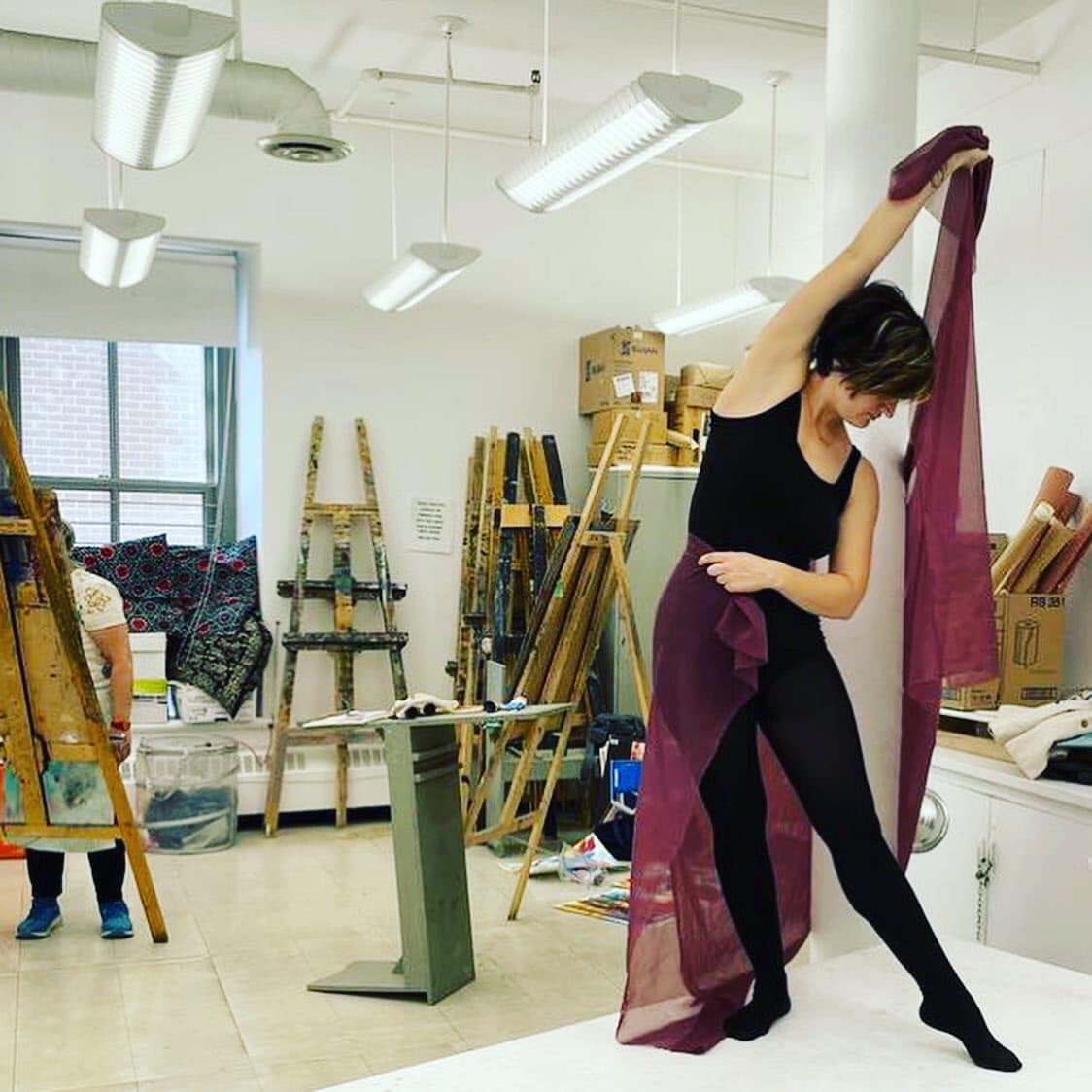
Not all life modelling involves nudity: for children and teen classes, models are asked to wear body suits or other clothing that cover up the torso; sometimes costumes are requested, especially when the instructors or artists want a splash of colour. However, most classes do require models to be undraped in order to study closely the anatomy and movements of the world’s most complex living subject. It is often said that if you can draw the human body, then you can draw anything.
On my third ever session, I was asked to pose nude for a class where the students were studying shadows and light. When we were due to begin, I removed my dark red dress with a tie around the waist and I placed it on a stool where I would sit, nude, under dim lighting, for the next hour.
It was like jumping into a pool of water: once you’re in, you’re in. And it was calm, peaceful; the only sounds were the scratching of pencils on paper, the soft music playing from the instructor’s laptop speakers. There was nothing I needed to do but be still.
And for someone who lives with anxiety, there is something very powerful in that. Ordinarily, there is always something I feel I should be doing: administrative tasks, housework, getting something for my child, updating my social media accounts, or solving all the world’s problems. Even when I sit down to meditate at home, aiming to be in the present moment, my anxiety convinces me I should be anywhere but right where I am. When I’m modelling, with people relying on my presence and stillness for their artworks, I know I’m exactly where I’m supposed to be.
While modelling requires me to present myself in various states of undress and vulnerability, I’ve rarely worried about people making inappropriate comments or touching me without my consent.
While it is perfectly acceptable for the model to change or end a pose early if they are in actual pain, part of the trick of modelling is being able and willing to sit or stand with a certain amount of discomfort. You may be able to twist your body easily for one minute or two, but are you able to sustain that twist for twenty minutes or more? Stubbornness plays a role in this, but it’s also a matter of getting comfortable with being physically uncomfortable.
For me this translates into being comfortable with uncomfortable emotions, like grief or fear or embarrassment or shame. Oftentimes when bad things happen to us, we do whatever we can to avoid thinking about those things: we binge watch television, we use drugs and alcohol, we scroll social media, we talk to our friends and family about anything except the very thing that’s bothering us.
When I’m modelling, I don’t have the option to turn on the television or browse my Instagram newsfeed. I’m entirely alone with my thoughts, so yes, things come up. Early on, I didn’t think I would be able to stay with my thoughts only, so I silently recited monologues I’d memorized, did mathematical equations, planned what I was going to buy at the grocery store and make for dinner. Anything I could do to distract myself from the fact that I was totally alone in my head, which can sometimes be a scary place, especially when I start to spiral.

But with my body perfectly still, my breathing steady and deep, I find that my physical calm inspires a mental calm, and I can process heavy and difficult thoughts without succumbing to panic or avoidance. I review instances when I wasn’t my best self and imagine how I could have managed the situation differently. I think about the times other people have caused me pain or distress and try to work through why I was so affected by these experiences. Sometimes I do this consciously and other times unconsciously. Other times, I just pick a spot on the wall or the ceiling and stare at it, finding beauty and intrigue in ordinary sightings.
And I’m no longer afraid of letting people see my body. In an art class, being objectified takes on a whole different meaning. When the students and artists are drawing or painting me, they observe my body not as people usually do (judging our physicality according to traditional standards of attractiveness), but as an object of art: to them, in this context, my body is simply a combination of shapes and tones and colours; there are tilts and stretches and squashes and lines of action; its purpose is to serve as a reference, to display itself honestly and transparently, to model what a body looks like without reservation (and without PhotoShop).
I realized that, all this time, I had nothing to hide. While modelling requires me to present myself in various states of undress and vulnerability, I’ve rarely worried about people making inappropriate comments or touching me without my consent. That is because respect for the model, their personal space, and their sense of safety are standard in these circles. It makes me wonder what the world would be like if we treated everyone this way in all situations, if nudity weren’t consistently sexualized and uninhibitedness equated to giving permission. Perhaps we would be far less fearful of each other, and far more open to meaningful connection.
When I finish a modelling session, parts of my body are sore (so gentle stretching is usually a good idea) but my mind is calm and happy. I love being in the company of artists of all ages, keen to learn and explore, to expand their minds and their creative spirits. I’ve talked a lot about the tranquility I experience in these sessions, but there’s also plenty of fun, joking around, playful conversation, and exhilarating discoveries. I feel so lucky to have found paid work that allows me to follow my instincts, move in ways that feel natural to me, and see myself through the eyes of artists. Getting to peruse all the different artworks at the end of class is, for me, one of the most rewarding parts of the job.
You know that dream where you show up to class and you’re totally naked and everyone is looking at you? I’m living that dream.
For more about my life modelling journey, follow @la.donna.immobile on Instagram.
 Jessica Ruano